As a passionate poker enthusiast, you’ve likely experienced the thrill and challenge of the game firsthand. However, even the most seasoned players can fall victim to common mistakes that can derail their progress and hinder their success. In this comprehensive article, we’ll explore the most prevalent poker pitfalls and provide you with actionable strategies to help you avoid them, ensuring you navigate the felt with confidence and skill.
Misreading Hand Strength
One of the most fundamental errors in poker is misreading the strength of your hand. Whether it’s overestimating a marginal holding or underestimating the potential of a strong hand, this mistake can lead to costly misjudgments and poor decision-making. To avoid this pitfall, it’s crucial to develop a deep understanding of poker hand rankings and the probabilities associated with different card combinations. By studying the game’s fundamentals and practicing hand analysis, you can sharpen your ability to accurately assess the strength of your cards and make informed decisions.
Failing to Adapt to the Situation
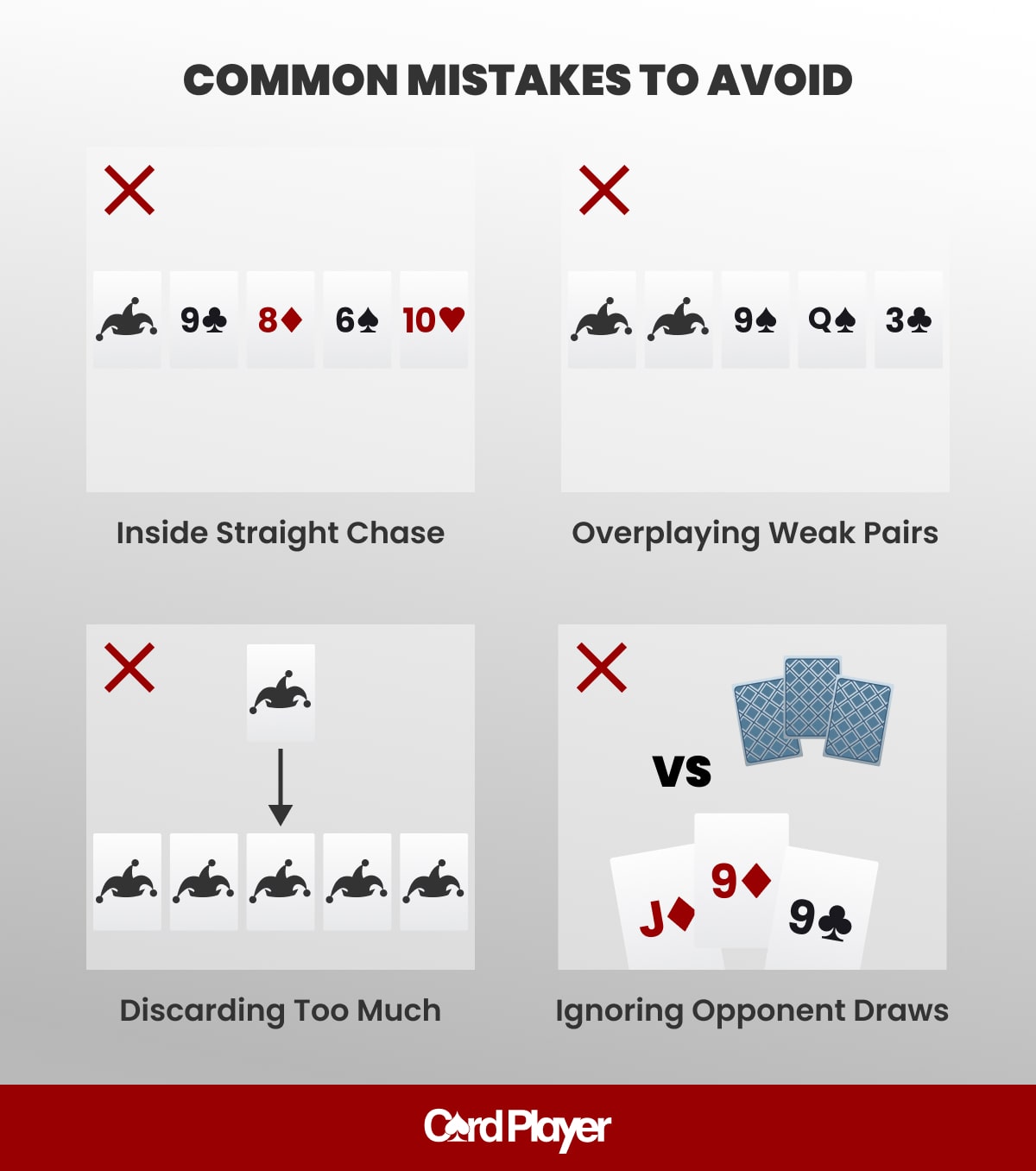
Poker is a dynamic game, and successful players are those who can adapt their strategies to the ever-changing circumstances at the table. Rigidly adhering to a single approach, regardless of the players, stakes, or game dynamics, can lead to predictable and exploitable play. The best players are adept at adjusting their style, bet sizing, and game plan based on factors such as position, stack sizes, and reads on their opponents. Embrace a flexible mindset and be willing to deviate from your default strategies when the situation calls for it.
Adjusting to Different Opponents
Each player at the table presents a unique challenge, with their own playing style, tendencies, and vulnerabilities. Failing to recognize and adapt to these differences can hinder your ability to maximize your profits. Observe your opponents closely, take note of their betting patterns, and tailor your approach accordingly. For example, against a tight-aggressive player, you may need to apply more pressure and be more willing to bluff, while against a loose-passive opponent, you can afford to play a more straightforward value-oriented game.
Adapting to Changing Conditions
The dynamics of a poker session can shift dramatically, whether it’s due to changes in stack sizes, the introduction of new players, or fluctuations in the overall aggression level. Recognizing these shifts and adjusting your strategy in real-time is a hallmark of successful players. Be attuned to the evolving circumstances and be willing to modify your play, such as tightening up your starting hand requirements when the stacks get shorter or increasing your bluffing frequency when the table becomes more passive.
Ignoring Position and Pot Odds
Position and pot odds are two critical factors in poker that often go overlooked by less experienced players. Position, or the order in which you act relative to your opponents, can have a significant impact on the value of your hands and the effectiveness of your plays. Similarly, understanding pot odds – the ratio of the current pot size to the cost of a future bet – is essential for making mathematically sound decisions about whether to call, fold, or raise. Neglecting these fundamental concepts can lead to costly mistakes and missed opportunities.
Tilting and Emotional Decision-Making
Poker is a game that requires not only strategic acumen but also emotional discipline. Succumbing to tilt, or the heightened emotional state that can arise from bad beats, poor luck, or other frustrating situations, can lead to reckless and irrational decision-making. When you’re on tilt, your ability to think clearly and make sound judgments becomes impaired, often resulting in a downward spiral of poor play and diminished bankroll. Develop strategies to manage your emotions, such as taking breaks, practicing mindfulness, or seeking support from fellow players.
Avoiding Impulsive Decisions
Poker is a game of patience and discipline, and making impulsive decisions can be the downfall of even the most talented players. Whether it’s chasing a draw, bluffing out of frustration, or overcommitting with a marginal hand, these types of impulsive plays can quickly erode your bankroll and undermine your long-term success. Cultivate a habit of carefully considering your options, analyzing the potential outcomes, and making decisions based on sound strategy rather than fleeting emotions.
Maintaining Composure Under Pressure
The high-stakes nature of poker can be a breeding ground for stress and anxiety, especially in critical moments. Maintaining your composure and keeping a level head when the pressure is on is a hallmark of the best players. Develop techniques to manage your mental state, such as deep breathing exercises, visualization, or post-session self-reflection. By staying calm and focused, you’ll be better equipped to make clear-headed decisions and avoid costly mistakes.
Remember, becoming a successful poker player is a journey of continuous learning and self-improvement. By recognizing and addressing these common mistakes, you’ll be well on your way to elevating your game and achieving greater success at the tables. As always, it’s important to practice responsible gambling and seek support if you or someone you know is struggling with problem gambling behaviors.
Leave a Reply